Torah sages are the ?eyes of the congregation? and the ?eyes of the world?. A person?s eyes do not choose where to go, but they provide information on impassable routes. Eyes do not have perspectives, values, or positions on issues, but they allow us to read and view content through which we can adopt positions and values.
This is the basis for the concept of ?Da?at Torah?; the opinions of Torah sages serve the entire nation and the individual person in the nation as ?eyes?. But let?s clarify this. There is a prevalent claim that a person who learns and teaches Torah automatically acquires understanding, the ability to advise, and the ability to deal with all facets of life. This claim is untrue. The Torah teaches man values and beliefs, commandments and good characteristics, but it does not make a person a doctor, or a psychologist, or most certainly ? a politician.
So, what is ?Da?at Torah?? In every complicated situation, in every dilemma we face as people and as Jews, there are different sides and a variety of standpoints. A dilemma can entail many different considerations: financial, social, familial, security, and more. Often, among the various aspects of the issue there are also spiritual considerations that affect it.
A realistic and mature adult knows that there is no shame in consulting experts. If we are facing a financial dilemma, we turn to the best economist, describe the various considerations and get his opinion. Whether or not we listen to his opinion is our choice. But the professional information is important so that we can make an educated decision. This is true also when we face a family dilemma ? consulting with a couples or family therapist is a wise step. The choice of how to act is always ours, but a professional opinion is invaluable.
This is also true when we face a dilemma regarding values or spirituality. A believing Jew knows that the source that inspires our values is the Torah. If we are not sure what to do when facing a spiritual dilemma, we should consult an expert, a person who has studied Torah for many years and has acquired the ability to learn and draw conclusions in situations that are not explicitly written in the Torah. Only after we get the information, can we make a decision and choose the path that best suits our beliefs.
This is ?Da?at Torah?. When we grasp the value of consulting with Torah sages regarding ideological and spiritual dilemmas, we are implementing the definitions of ?eyes of the congregation? and ?eye of the world?.
ירושלים
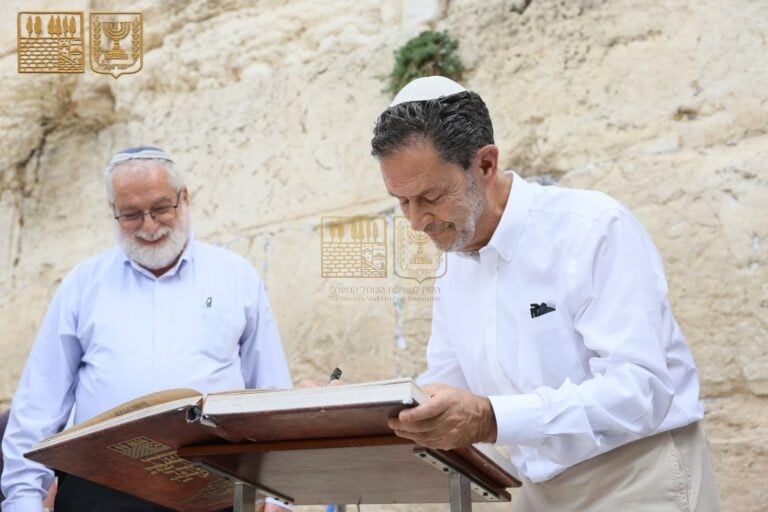
Following the Inauguration of Colombia’s Embassy in Jerusalem: Colombia’s Foreign Minister Visits the Western Wall: “This Is the Most Sublime and Profound Moment of My Life!”
As part of his official visit to Israel, and following the inauguration of Colombia’s embassy in Jerusalem, Colombian Foreign Minister Omar Bula Escobar arrived