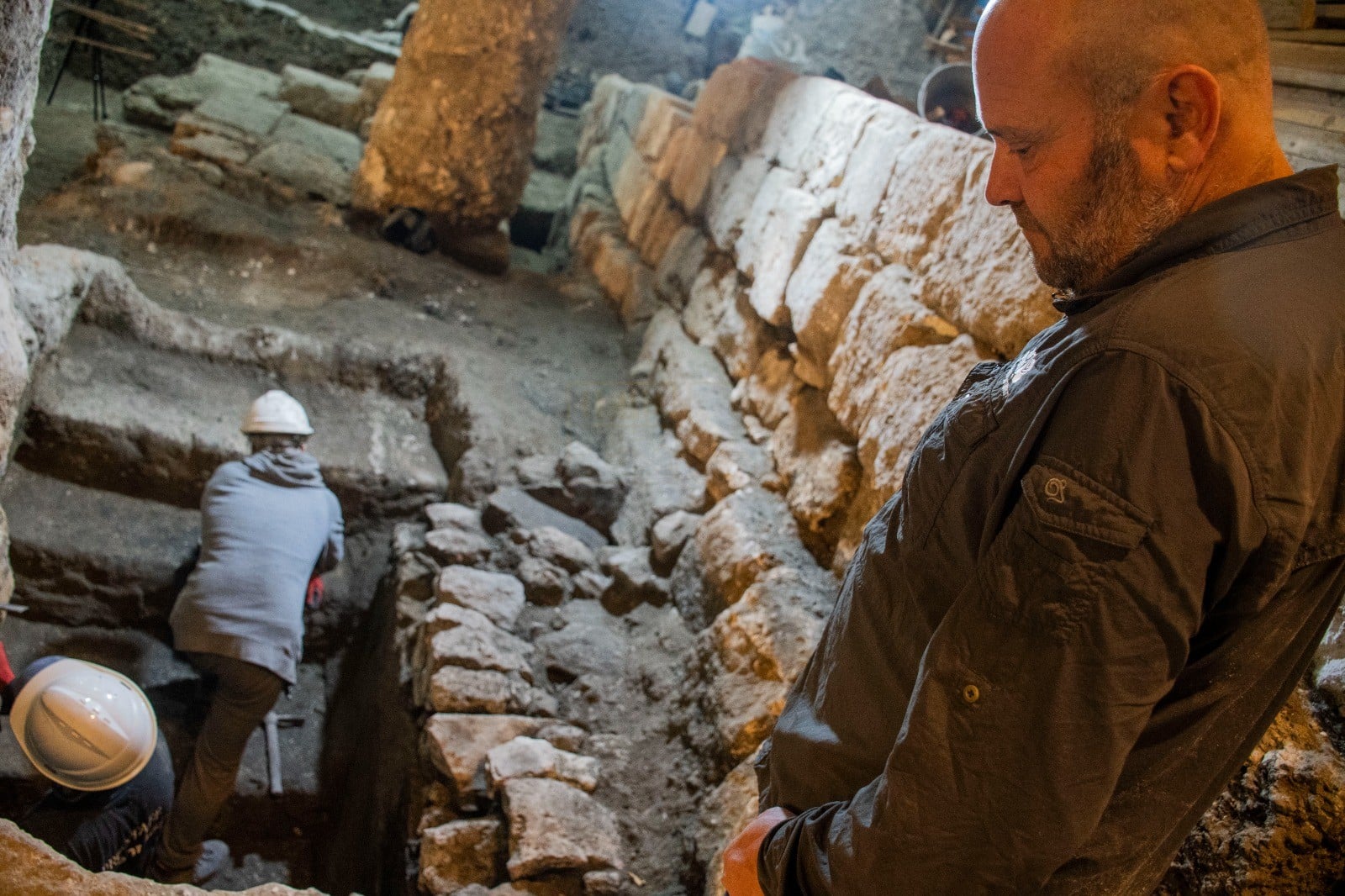
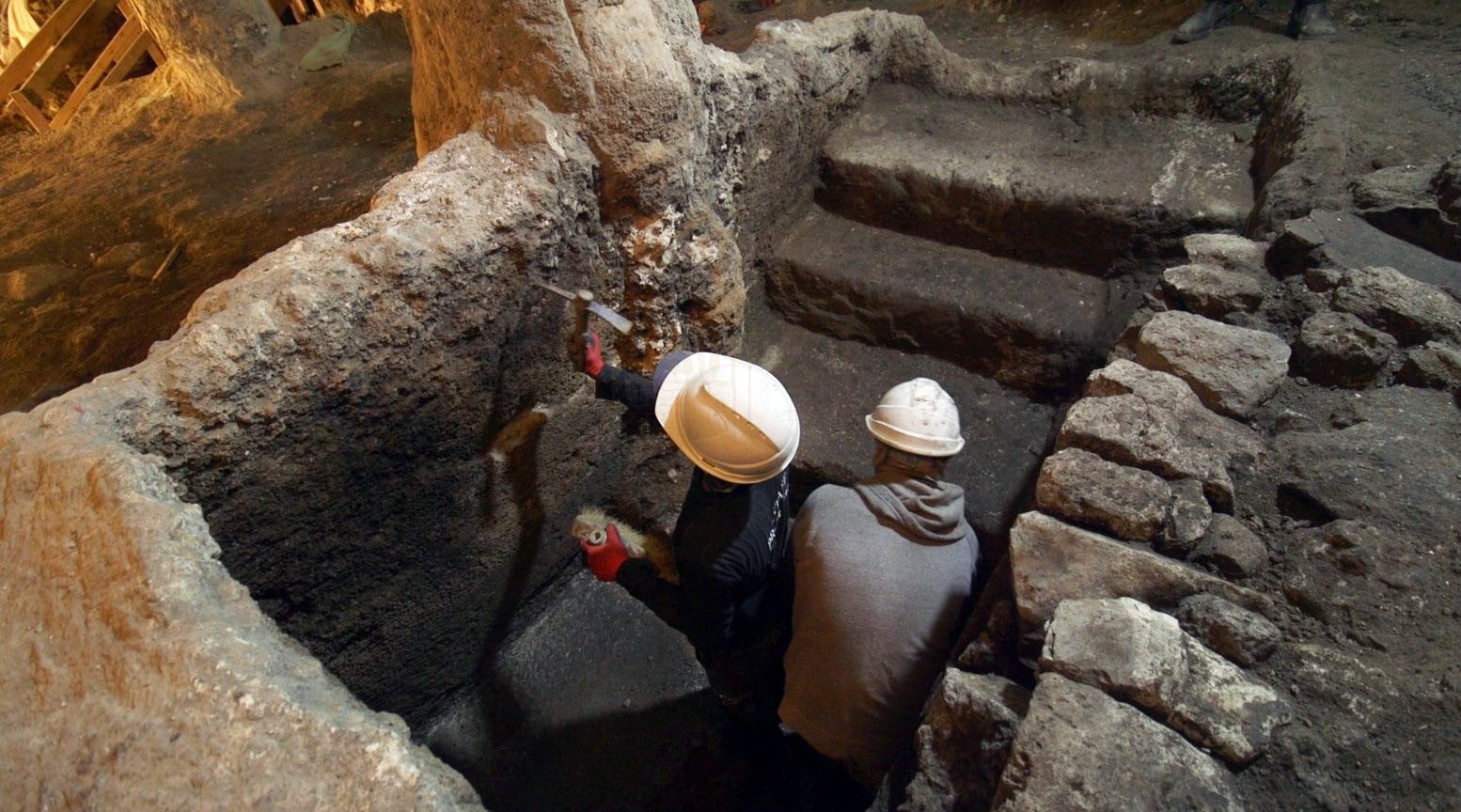
A mikveh (ritual purification bath) from the late Second Temple period uncovered in archaeological excavations beneath the Western Wall Plaza
The rock-hewn mikveh was revealed beneath a destruction layer – evidence of the events of Jerusalem’s destruction nearly 2,000 years ago • Excavations by the Israel Antiquities Authority and the Western Wall Heritage Foundation are being conducted as part of uncovering Jerusalem’s glorious past
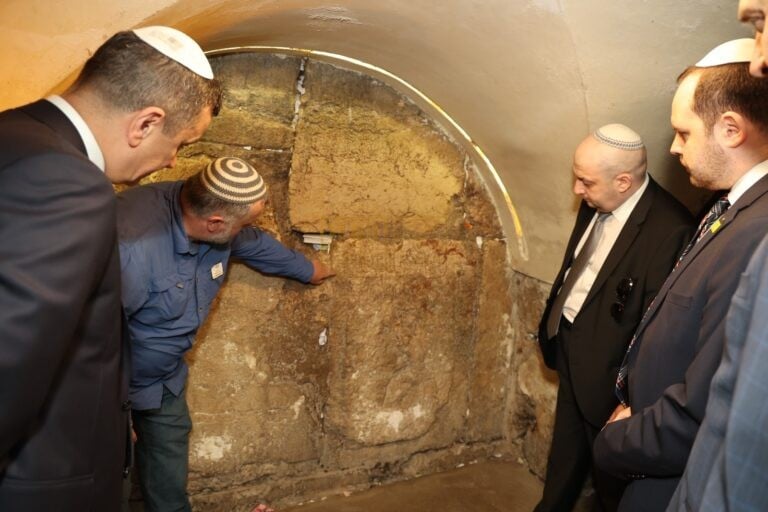
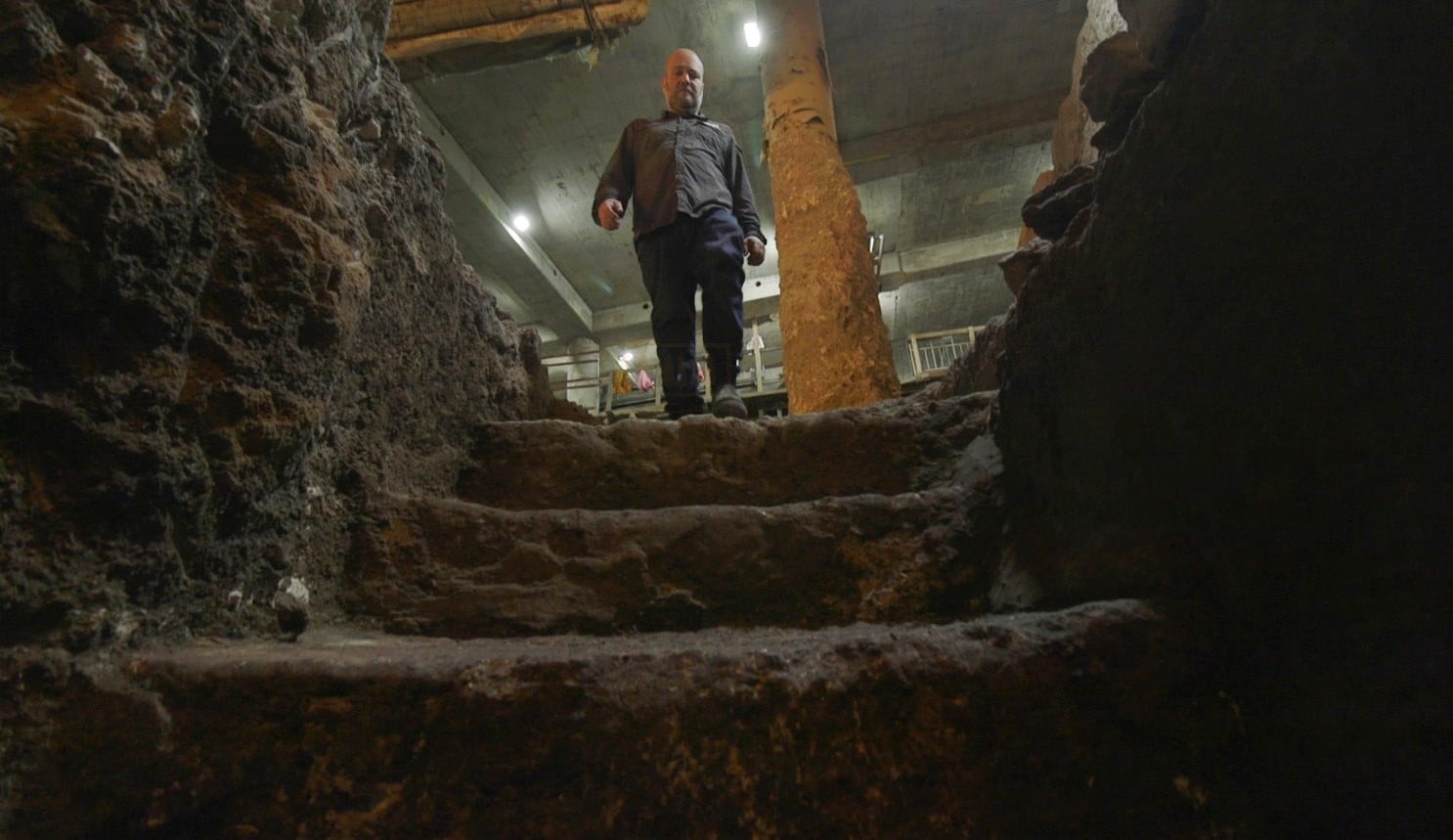
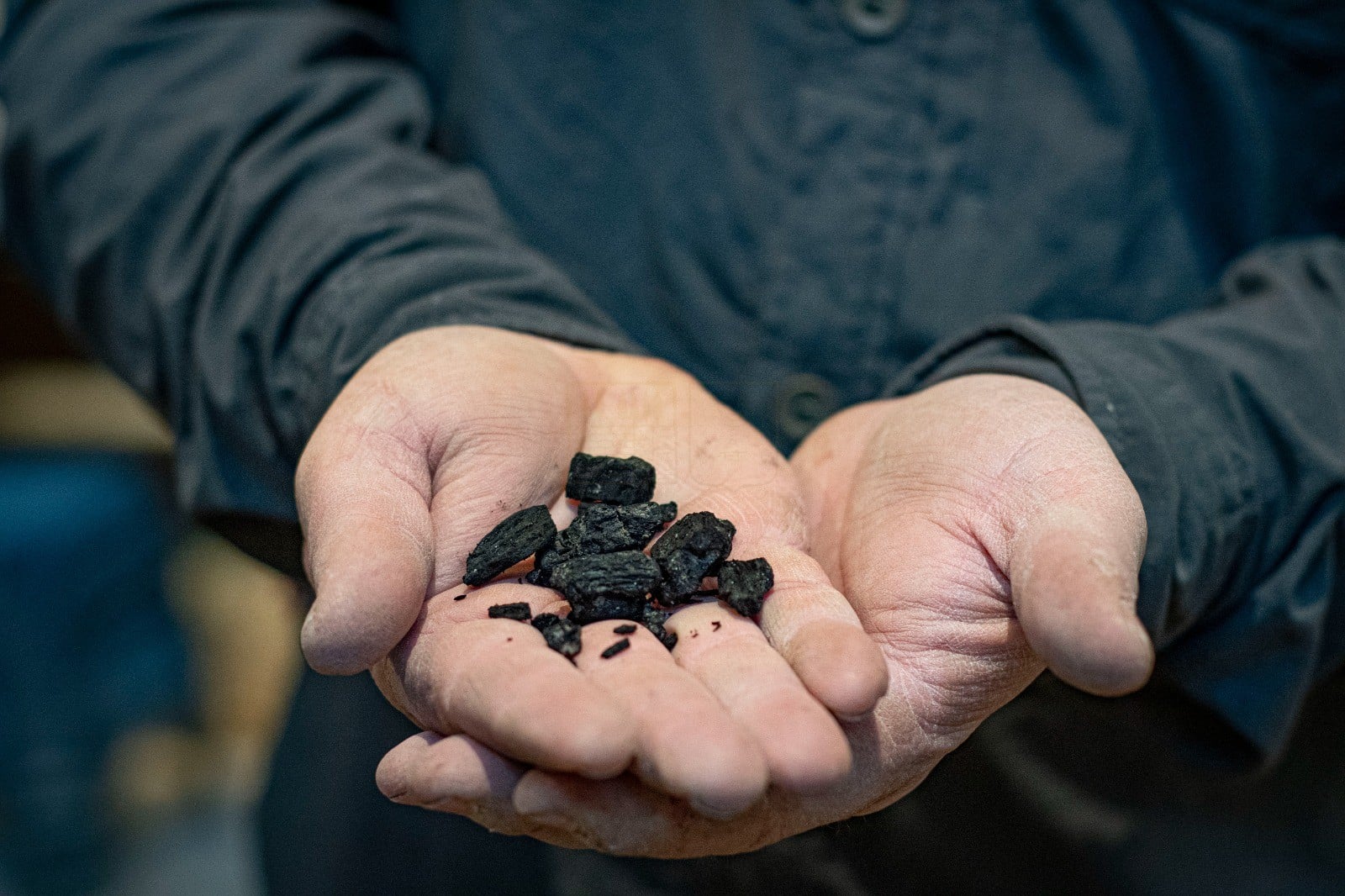
A rock-hewn mikveh (ritual purification bath) dating to the late Second Temple period, bearing traces of ash that testify to the destruction of the Temple, was uncovered in recent days during excavations carried out by the Israel Antiquities Authority and the Western Wall Heritage Foundation beneath the Western Wall Plaza. The discovery is part of ongoing efforts to uncover Jerusalem’s glorious past.
The mikveh is rectangular in shape, measuring 3.05 meters in length, 1.35 meters in width, and 1.85 meters in height. It is hewn into the bedrock and its walls are plastered. Four hewn steps leading into the mikveh were exposed on its southern side. The ancient installation was found sealed beneath a layer from the Second Temple period, dated to the year 70 CE.
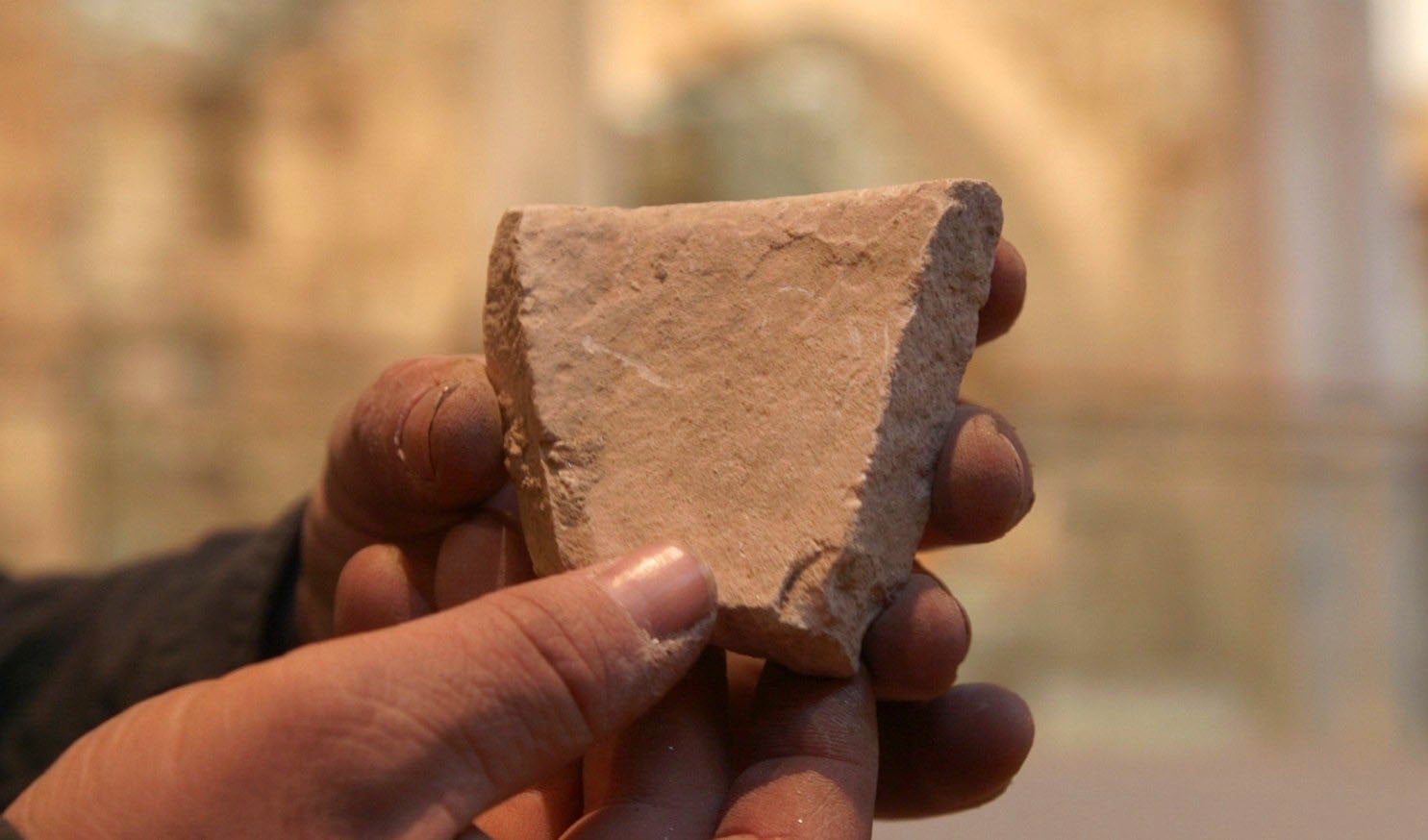
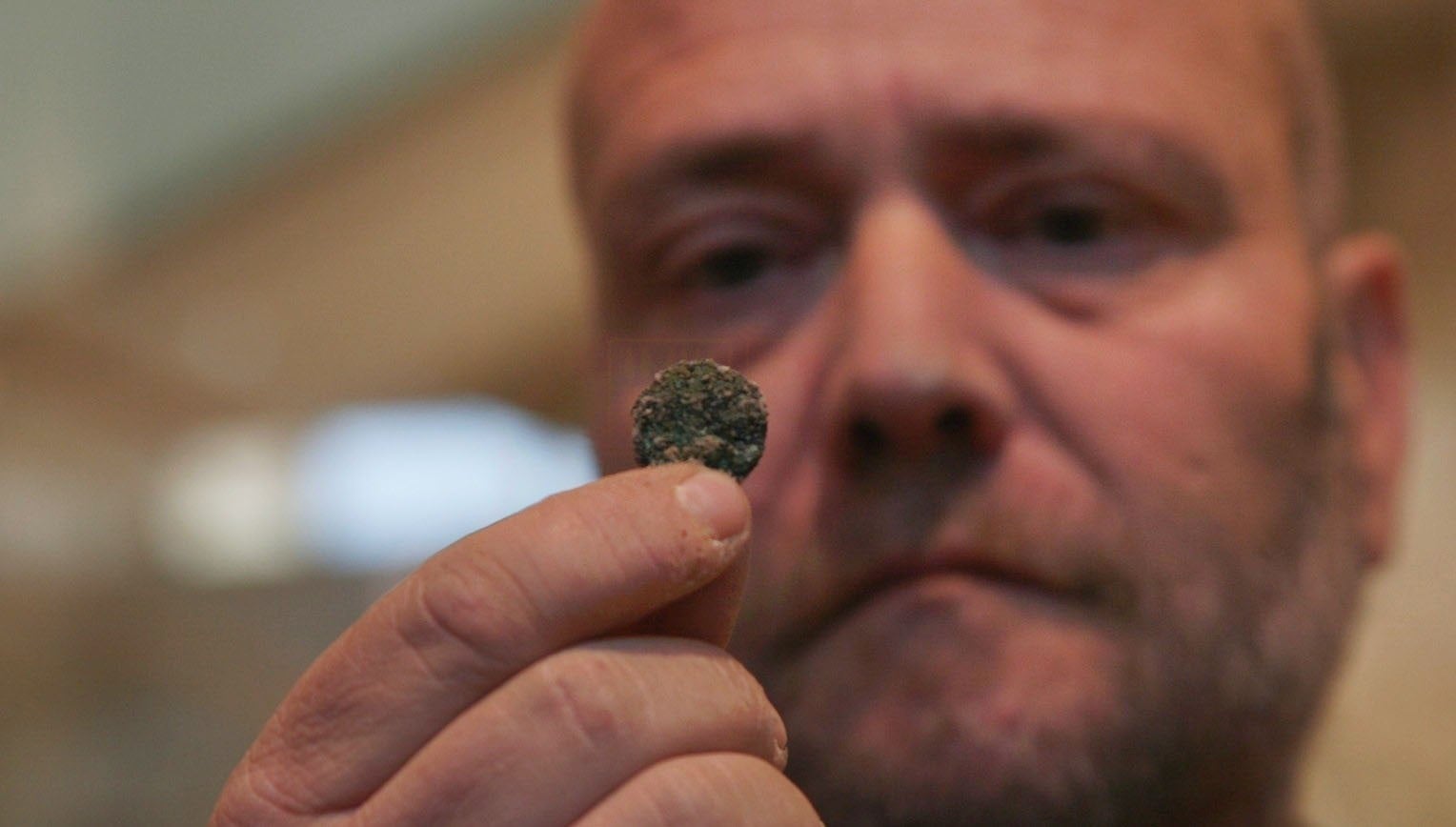
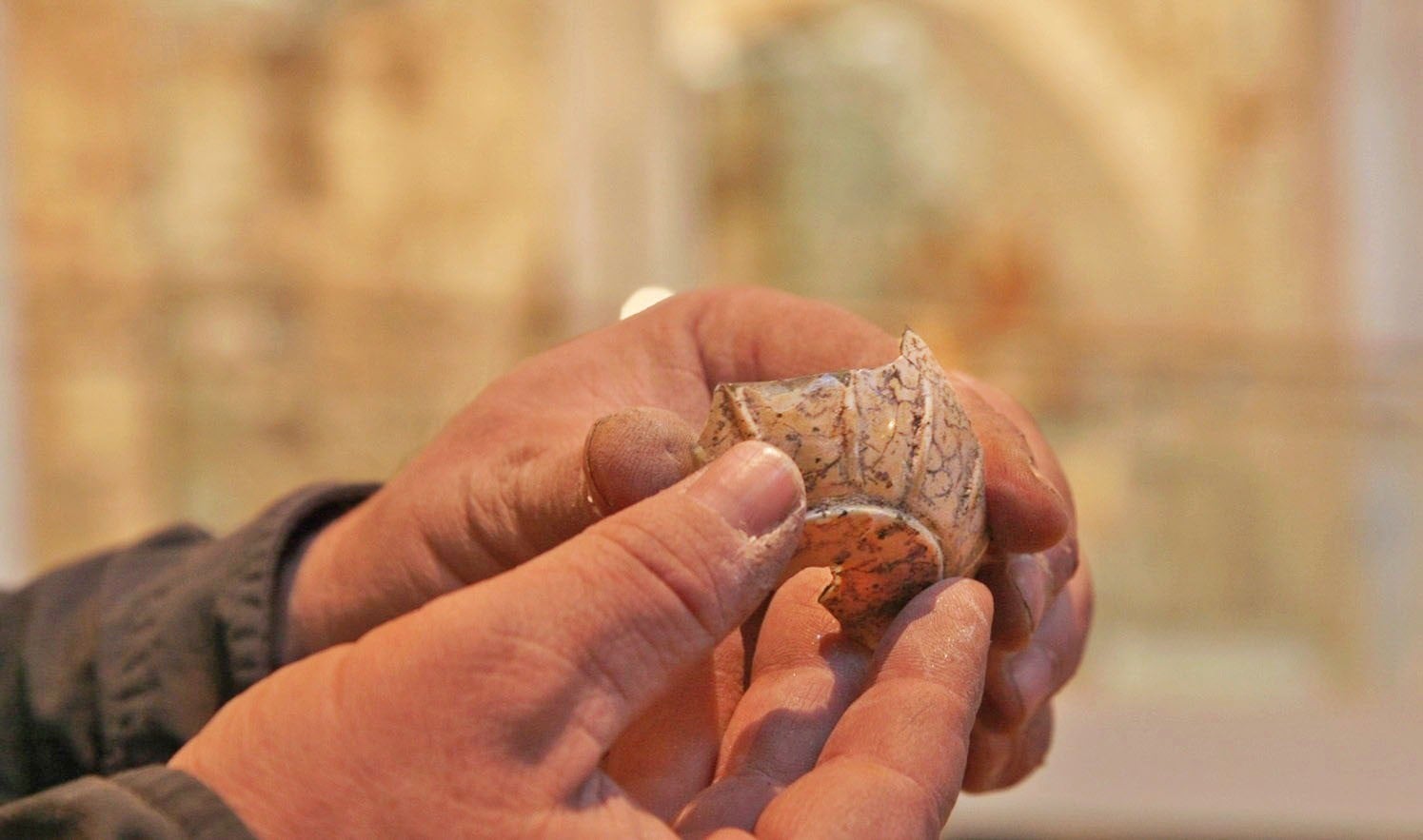
Within this layer, which contains burned ash bearing witness to the destruction, numerous pottery vessels were discovered, along with stone vessels characteristic of the Jewish population that lived in the city on the eve of the destruction.
The excavations beneath the Western Wall Plaza, where the ritual bath was discovered, are located in close proximity to the site of the ancient Temple and to what served as its main entrances some 2,000 years ago – the Great Bridge to the north and Robinson’s Arch to the south. Additional finds in the area attest to activity related to ritual purity, including mikva’ot, stone vessels, and more.
Researchers of the Israel Antiquities Authority believe that the mikveh served the Jews who lived in the area as well as the many pilgrims who frequented the site and the Temple.
“Jerusalem should be remembered as a Temple city,” explains Ari Levy, excavation director on behalf of the Israel Antiquities Authority. “As such, many aspects of daily life were adapted to this reality, and this is reflected especially in the meticulous observance of the laws of ritual impurity and purity by the city’s residents and leaders. Indeed, the saying ‘purity spread in Israel’ was coined in this context. Among the most prominent archaeological finds representing this phenomenon are ritual baths and stone vessels, many of which have been uncovered in excavations throughout the city and its surroundings,” says Levy. “The reasons for using stone vessels are halakhic, rooted in the recognition that stone, unlike pottery and metal vessels, does not contract ritual impurity. As a result, stone vessels could be used over long periods and repeatedly.”
According to the Minister of Heritage, Rabbi Amichai Eliyahu: “The exposure of the ritual bath beneath the Western Wall Plaza strengthens our understanding of how deeply intertwined religious life and daily life were in Jerusalem during the Temple period. This moving discovery, made just ahead of the fast of the Tenth of Tevet, underscores the importance of continuing archaeological excavations and research in Jerusalem, and our obligation to preserve this historical memory for future generations.”
According to the director of the Western Wall Heritage Foundation, Mordechai (Suli) Eliav: “The exposure of a Second Temple period ritual bath beneath the Western Wall Plaza, with ashes from the destruction at its base, testifies like a thousand witnesses to the ability of the people of Israel to move from impurity to purity, from destruction to renewal.”
Emil Aladjem, Israel Antiquities Authority