Parashat Vayera – 5786
By Rabbi Shmuel Rabinowitz, Rabbi of the Western Wall and Holy Sites
Abraham our forefather is the embodiment of kindness – a man of hospitality and generosity to the poor. The opposite ideology is that of Sodom. In Sodom, guests were not to be welcomed, and all the more so, one was forbidden to feed them or give them any form of help.
We are all familiar with the story of Sodom and Gomorrah, cities that became symbols of “social Darwinism” – a distorted worldview claiming that society should evolve through the survival of the fittest. The consequence of such thinking is dreadful: helping the weak is seen as weakening society as a whole and hindering human progress. According to this view, not only is assistance unnecessary, but it is harmful.
Much has been studied and written about the link between Darwin’s theory of evolution and its offshoot – the ideology of social Darwinism. What is clear, however, is that Judaism stands for the exact opposite. Since the days of Abraham, our founding father, our people’s defining characteristic has been that we are “compassionate and doers of kindness.”
Therefore, in this week’s Torah portion, when God informs Abraham, the embodiment of kindness, that He intends to destroy Sodom and Gomorrah because of their wickedness, one might expect Abraham to rejoice. Finally, evil will be wiped away; the ideology that opposes his values of mercy and faith will vanish. What could be better?
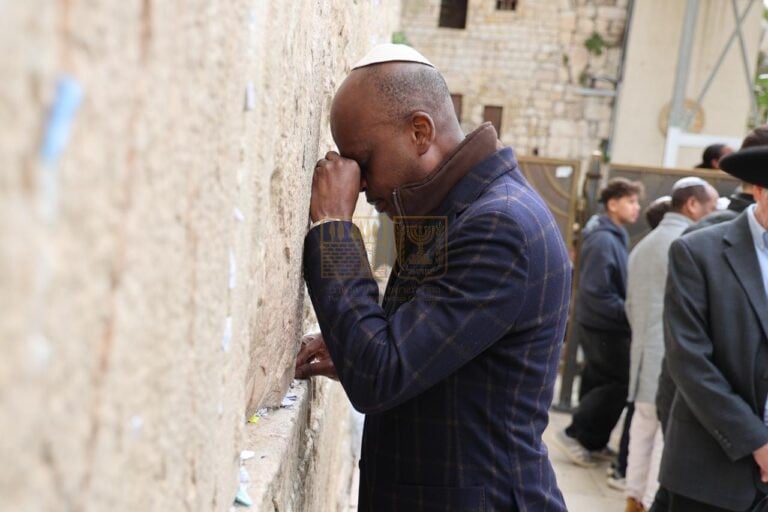
Yet, to our astonishment, Abraham is horrified. He stands in prayer and cries out to Heaven. Not only does he pray, but this is the first prayer recorded in the Torah. Our sages learn from it that Abraham established the morning prayer (Shacharit):
“Far be it from You to do such a thing… Shall the Judge of all the earth not do justice?”
(Genesis 18:25)
This seemingly illogical prayer is precisely what teaches us the essence of prayer. Hasidic teachings explain that through Abraham’s prayer we learn a profound truth: prayer is not about logic or persuasion. It is about connection.
One of the purposes of creation is that we, fragile human beings of flesh and blood, establish a channel of relationship with the infinite Divine, even when it defies rational understanding. Otherwise, one might ask: does God not know what is best for us? Everything He does is for our good, even if we cannot perceive it immediately. If so, why pray for change at all?
Abraham’s prayer on behalf of Sodom teaches us that prayer is not a demand to change God’s will, nor an attempt to interfere in Divine judgment. Rather, it is a connection through which we awaken the potential for goodness, even when we may not deserve it.
From Abraham’s prayer we learn that even when we accept that hardship or suffering might help refine us or make us better people, our prayer can still bring about that growth through gentler means, without pain or affliction.
That is why Abraham, the man of kindness, stood to pray for those whose deeds represented the very embodiment of evil. He believed in the power of his connection to God and in its ability to bring about true transformation – far more powerfully than any punishment, no matter how justified.