Parashat Shemot – 5785
By Rabbi Shmuel Rabinowitz, Rabbi of the Western Wall and Holy Sites
Parashat Shemot, which opens the second book of the Torah, recounts the suffering of the Israelites in Egypt. After years of comfort in Egypt, they were subjected to harsh enslavement. Pharaoh decreed the execution of all newborn Jewish boys, and generations of Israelites lived as downtrodden slaves, devoid of hope. Finally, when the suffering became unbearable, their cries reached heaven, and God decided to bring their torment to an end.
God revealed Himself to Moses, who was raised in Pharaoh’s palace, and tasked him with the mission of announcing the redemption to the Israelites.
The Midrash explains that Moses was chosen for this mission because of his kindness and compassion. Despite his privileged position, Moses identified with the suffering of his brethren:
“He saw their burdens”
(Exodus 2:11).
The Midrash elaborates:
“…He would see their suffering and weep, saying: ‘Woe to me for you! If only I could die for you, for there is no labor more difficult than working with mortar.’ He would lend his shoulder and help each one of them. Rabbi Elazar, the son of Rabbi Yosei HaGelili, said: He saw a heavy burden placed on a small person and a light burden on a large person, a man’s burden on a woman and a woman’s burden on a man, an elder’s burden on a youth and a youth’s burden on an elder. He would set aside his own princely staff, go to them, and adjust their burdens as though assisting Pharaoh.
The Holy One, Blessed be He, said: ‘You set aside your own concerns to see the suffering of Israel and treated them as brothers. Therefore, I will set aside the heavenly and earthly realms and speak with you.’”
(Midrash Rabbah, Shemot, Parasha 1)
Remarkably, even after this divine revelation and a direct command to confront Pharaoh and lead the redemption, Moses hesitated. For seven days, as Rashi (the great biblical commentator, Rabbi Shlomo Yitzchaki) explains, Moses argued with God, trying to avoid the mission. His primary concern was that his older brother, Aaron, might feel slighted if Moses were chosen to lead.
We learn [from this] that for a full seven days the Holy One, blessed be He, was enticing Moses in the thorn bush to go on His mission…All this [reluctance] was because he [Moses] did not want to accept a position higher than his brother Aaron, who was his senior.
(Rashi on Exodus 4,10)
It is astounding. An entire nation awaits redemption while the suffering is overwhelming, yet Moses does not agree to go until God promises him that Aaron would not be harmed and would actually take part in the redemption journey. Finally, God reassured Moses, promising that Aaron would not only accept his role but would rejoice in his heart:
“And behold, he is coming out to meet you, and when he sees you, he will be glad in his heart.”
(Exodus 4:14).
This episode teaches a profound lesson: Redemption and progress cannot come at the expense of another’s dignity. Even as an entire nation awaited salvation, Moses refused to proceed until he was certain that no one would be hurt or disrespected.
This story highlights the deep Jewish value of honoring others. True goodness and redemption must always uphold respect and compassion for every individual.

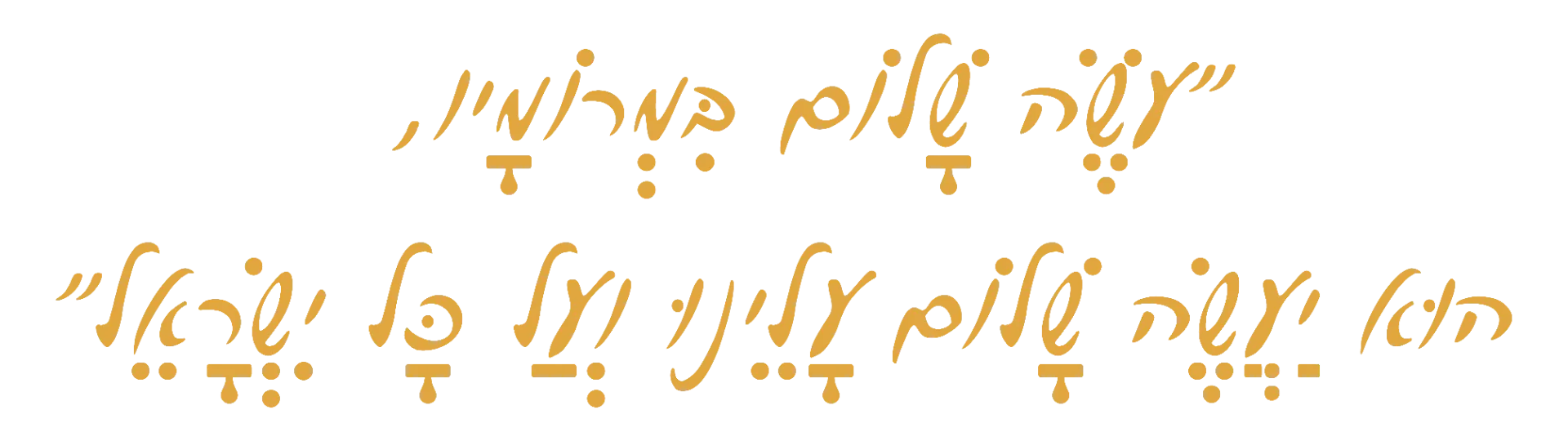


Compassion and Respect for Others
Parashat Shemot – 5785
By Rabbi Shmuel Rabinowitz, Rabbi of the Western Wall and Holy Sites
Parashat Shemot, which opens the second book of the Torah, recounts the suffering of the Israelites in Egypt. After years of comfort in Egypt, they were subjected to harsh enslavement. Pharaoh decreed the execution of all newborn Jewish boys, and generations of Israelites lived as downtrodden slaves, devoid of hope. Finally, when the suffering became unbearable, their cries reached heaven, and God decided to bring their torment to an end.
God revealed Himself to Moses, who was raised in Pharaoh’s palace, and tasked him with the mission of announcing the redemption to the Israelites.
The Midrash explains that Moses was chosen for this mission because of his kindness and compassion. Despite his privileged position, Moses identified with the suffering of his brethren:
The Midrash elaborates:
“…He would see their suffering and weep, saying: ‘Woe to me for you! If only I could die for you, for there is no labor more difficult than working with mortar.’ He would lend his shoulder and help each one of them. Rabbi Elazar, the son of Rabbi Yosei HaGelili, said: He saw a heavy burden placed on a small person and a light burden on a large person, a man’s burden on a woman and a woman’s burden on a man, an elder’s burden on a youth and a youth’s burden on an elder. He would set aside his own princely staff, go to them, and adjust their burdens as though assisting Pharaoh.
Remarkably, even after this divine revelation and a direct command to confront Pharaoh and lead the redemption, Moses hesitated. For seven days, as Rashi (the great biblical commentator, Rabbi Shlomo Yitzchaki) explains, Moses argued with God, trying to avoid the mission. His primary concern was that his older brother, Aaron, might feel slighted if Moses were chosen to lead.
It is astounding. An entire nation awaits redemption while the suffering is overwhelming, yet Moses does not agree to go until God promises him that Aaron would not be harmed and would actually take part in the redemption journey. Finally, God reassured Moses, promising that Aaron would not only accept his role but would rejoice in his heart:
This episode teaches a profound lesson: Redemption and progress cannot come at the expense of another’s dignity. Even as an entire nation awaited salvation, Moses refused to proceed until he was certain that no one would be hurt or disrespected.
This story highlights the deep Jewish value of honoring others. True goodness and redemption must always uphold respect and compassion for every individual.
Join our WhatsApp group
More updates
The Western Wall stone that had been on display at the Kirya (IDF headquarters in Tel Aviv) has been returned to the Western Wall.
Historic full circle: an ancient stone from the Western Wall, displayed for years in the IDF Headquarters compound, was returned this morning to its original
Quality vs. Quantity – Parashat Behar–Bechukotai
Parashat Behar–Bechukotai 5786 Rabbi Shmuel Rabinowitz, Rabbi of the Western Wall and Holy Sites Parashat Behar opens with a unique and challenging commandment: just as
Jerusalem Day 2026
This year, Jerusalem Day falls on Friday, and therefore the celebrations have been moved to Thursday.
Lag BaOmer Bonfire Lighting Ceremony
The Western Wall Heritage Foundation invites the public to the “hilula” of Rabbi Shimon bar Yochai and to the central bonfire lighting ceremony at the Western Wall Plaza.
The Social Revolution – Parashat Emor
Parashat Emor 5786 Rabbi Shmuel Rabinowitz, Rabbi of the Western Wall and Holy Sites Parashat Emor deals with the unique status of the kohanim who
The president of Argentina concluded his visit to Israel with a prayer at the Western Wall.
Argentina’s President during his visit to the Western Wall: “Here I feel close to God!”